
Halong Bay is a mesmerizing labyrinth of towering limestone karsts, hidden lagoons, and calm, emerald waters. While admiring this UNESCO World Heritage site from the sundeck of a luxury cruise ship is undeniably breathtaking, the true magic of the bay is only revealed when you get close to the water.
To explore the quietest corners of the bay - where the cliffs rise vertically from the sea and secret archways lead to enclosed lagoons - you must transition to a smaller watercraft. For travelers, this presents a classic choice: kayaking or riding in a traditional bamboo boat.
Each option offers a completely different rhythm, physical experience, and connection to the local culture. Understanding the nuances of both will help you choose the perfect vessel for your aquatic adventure.
For those who want to feel the pulse of the bay in their own hands, kayaking is the ultimate choice. Sitting just inches above the water, paddling a kayak gives you complete control over your journey.
The greatest appeal of kayaking is freedom. There are no fixed paths or schedules. You can paddle at your own pace, stop to touch the ancient limestone walls, or glide into a quiet, shadowed alcove to listen to the gentle lap of the water against the rock.
It is an active, immersive experience that engages your senses. You feel the cool sea spray on your skin, the tension in your shoulders as you guide the craft, and the rewarding sensation of navigating through narrow cave openings, such as Luon Cave or Sang Toi (Dark and Bright) Cave, entirely under your own power.
Vessel Type: Most cruises in Halong Bay provide double (tandem) sit-on-top kayaks, which are highly stable and difficult to flip, making them suitable even for beginners. Single kayaks are also occasionally available.
Physical Demands: While the waters of Halong Bay are generally calm and protected by the surrounding karsts, kayaking still requires moderate physical effort. Paddling against a gentle current or wind can be tiring, and you should expect to get your lower half wet.
Best For: Active travelers, couples, adventure seekers, and anyone who wants to capture unique, close-up photos of the bay without other tourists in their frame.
If kayaking is about active exploration, a ride on a traditional bamboo boat (đò nan) is about gentle observation and cultural connection. This is a communal experience that invites you to slow down and let a local resident guide you through the water.
Constructed from woven bamboo split-peels and waterproofed with natural pitch, these round-bottomed boats have been used by the fishing communities of Halong Bay for generations. Today, they are rowed by locals who grew up in the floating villages.
Sitting on a bamboo boat, you do not have to worry about navigation, steering, or physical exertion. Your only job is to sit back, breathe in the salty air, and observe. The local rowers - often operating the oars with their feet in a traditional, rhythmic style - possess an intimate knowledge of the bay. They can point out hidden details in the stone, spot wild monkeys clinging to the cliffs, or share stories of life on the water that you would otherwise miss.
Vessel Type: These are larger, open-air boats that typically accommodate 4 to 6 passengers. You sit on wooden benches under the open sky while the rower stands at the rear.
Physical Demands: None. This is a fully escorted, relaxing experience. You remain completely dry, making it safe to bring high-end cameras, binoculars, and delicate electronics.
Best For: Families with young children, multi-generational groups, seniors, photography enthusiasts who want stable hands-free shooting, and those who prefer a relaxed, historical narrative.
To help you decide which craft suits your travel style, here is a quick breakdown of how they compare across key categories:
| Criteria | Kayaking | Bamboo Boat |
| Pace & Rhythm | Active, self-directed, adventurous | Relaxed, slow, contemplative |
| Physical Effort | Moderate to high (paddling required) | None (fully rowed by a local guide) |
| Privacy Level | High (just you and your paddling partner) | Shared (usually 4 to 6 guests per boat) |
| Cultural Aspect | Focus on sport and nature exploration | Direct connection to local heritage and people |
| Wetness Factor | High chance of getting splashed | Completely dry and secure |
| Best For Photography | Great for action shots (needs waterproof bag) | Ideal for stable, high-quality landscape shots |
If you are torn between the two, consider the following scenarios to guide your choice:
If you are traveling with young children or elderly family members, the bamboo boat is the undisputed winner. It offers a safe, stable environment where everyone can enjoy the scenery together without physical strain. However, if you are traveling as a couple or with active friends, the shared effort of steering a kayak can be a fun, bonding experience.
On a warm, sunny day in May or October, getting splashed in a kayak is incredibly refreshing. On the other hand, if you are visiting during the cooler, mistier winter months of December or January, a dry, peaceful ride on a bamboo boat allows you to enjoy the ethereal beauty of the bay comfortably wrapped in a light jacket.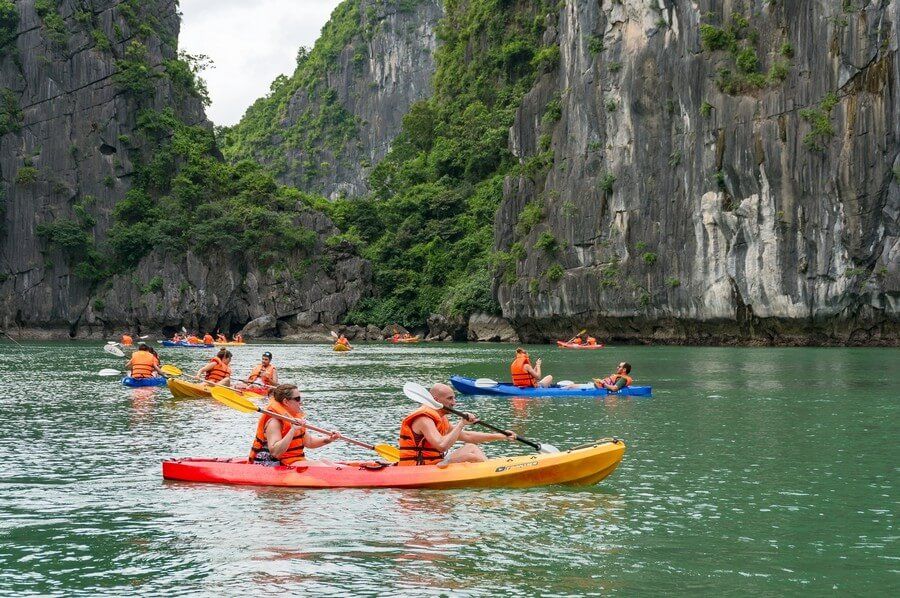
Kayaking is wonderful for capturing candid, close-up moments, but managing a heavy DSLR camera while paddling is risky. If you are a serious photographer looking to capture the perfect, steady shot of the karst reflections or the local wildlife, the stable platform of a bamboo boat is far superior.
Whether you choose the independent adventure of a kayak or the cultural charm of a traditional bamboo boat, escaping the confines of the larger cruise ship is essential to truly understanding Halong Bay. One allows you to write your own story on the water; the other invites you to listen to a story that has been told for generations.
To experience the very best of Halong Bay’s aquatic wonders—complemented by five-star royal hospitality and exquisitely curated excursions—discover the art of ocean travel at
Saying "I do" against a backdrop of endless blue waters, dramatic limestone karsts, or a golden sunset dipping below the horizon is the epitome of modern romance. For couples seeking an intimate yet breathtakingly grand setting, chartering a luxury cruise ship for a destination wedding has become the ultimate choice.
A cruise wedding seamlessly blends a five-star venue, fine dining, professional event coordination, and a multi-day vacation for your guests into one cohesive experience. From the dramatic cliffs of Halong Bay to the pristine archipelagos of the Mediterranean, here is a curated guide to the best luxury cruise experiences for an unforgettable wedding.
Traditional venue planning often comes with logistics headaches—managing hotel room blocks, coordinating transport between the ceremony and reception, and finding catering that pleases every guest. A luxury cruise charter elegantly solves these challenges.
All-Inclusive Elegance: Accommodation, world-class dining, wellness facilities, and scenic event spaces are all housed in one floating resort.
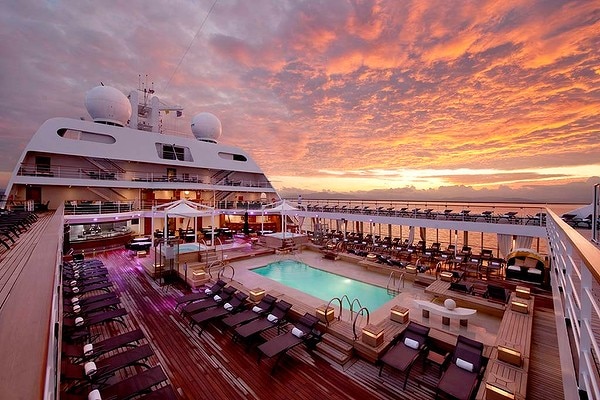
Ever-Changing Backdrops: Unlike a static beachfront resort, a cruise offers a shifting tapestry of landscapes. Your ceremony can take place in a quiet, secluded cove, while your reception unfolds under a starlit sky in open waters.
Built-In Honeymoon: Once the guests depart or settle into their suites, your honeymoon begins instantly, without the need for stressful airport transfers.
Depending on your aesthetic - whether it is classic European elegance, rustic tropical charm, or royal heritage - different waters offer distinct backdrops for your vows.
For couples who appreciate artistry, deep cultural stories, and otherworldly natural landscapes, the towering limestone karsts of Halong Bay and Lan Ha Bay offer an unmatched dramatic setting.
Boutique luxury vessels in this region are designed with inspiration from historic eras, blending colonial French elegance with traditional Vietnamese royal aesthetics. These ships feel more like private mega-yachts than commercial ocean liners. Offering highly personalized services, they allow couples to exchange vows on a spacious sundeck surrounded by emerald waters and ancient, mist-shrouded islets. It is an intimate, cinematic choice that feels both deeply poetic and exclusive.
If your vision of a wedding involves chic coastal towns like Saint-Tropez, Amalfi, or St. Barts, a luxury mega-yacht charter is the gold standard. These vessels typically accommodate 50 to 100 guests, allowing for a highly customized itinerary.
Imagine hosting a welcome cocktail party as the ship glides past the cliffside colorful houses of Positano, followed by a sunset ceremony on the top deck. The sleek, modern design of mega-yachts appeals to couples who want a high-fashion, contemporary vibe with state-of-the-art sound systems, infinity pools, and beach clubs that descend directly into the sea.
For adventurous couples who find romance in the wild, an expedition wedding is a truly unique concept. Ultra-luxury expedition vessels combine rugged exploration capability with refined indoor comforts.
Instead of traditional floral arches, your backdrop could be a massive, glittering glacier in Alaska or the pristine, volcanic shores of the Galapagos Islands. After a day of exploring with naturalists, guests return to the ship for Michelin-starred dining, thermal spas, and a cozy evening by the fire pits.
Planning a wedding at sea requires a slightly different approach than planning on land. To ensure your celebration is seamless, pay close attention to these crucial elements:
The first decision you must make is whether to charter the entire vessel or book a block of suites on a scheduled sailing.
Full Charter: This option gives you complete privacy and control. The ship is yours. You can customize the itinerary, dictate the daily schedule, brand the menus, and select the music without worrying about disturbing other passengers. This is ideal for weddings with 30 to 120 guests.
Group Booking: For smaller, micro-weddings (10 to 20 guests), booking a cluster of premium suites on a larger luxury ship is highly cost-effective. You still enjoy gourmet dining and beautiful venues, but you will share the ship with other travelers.
Can the captain legally marry you? While pop culture says yes, the legal reality depends on the ship’s registry and the waters you are sailing in.
Many couples choose to handle the legal paperwork at a local courthouse before boarding, treating the ceremony on the cruise as a symbolic and spiritual celebration.
If you want a legally binding marriage certificate issued at sea, look for cruise lines registered in countries like Malta, Bermuda, or the Bahamas, which grant captains the authority to perform legal ceremonies in international waters.
Food is the heart of any wedding reception. Luxury cruises excel in this department, often collaborating with world-renowned chefs to design custom menus. For a coastal wedding, emphasize local catch-of-the-day seafood, tropical fruits, and premium wine pairings that reflect the region you are sailing through.
>>> Read More: https://emperorcruises.com/cruise-weddings-in-halong-bay/
A wedding on a luxury cruise is more than just a ceremony; it is a shared journey of discovery for you and your loved ones. By trading a traditional ballroom for a floating sanctuary, you create an intimate atmosphere where every sunset brings a new view and every morning begins with the gentle lull of the ocean.
To begin designing your dream wedding amidst the breathtaking, poetic landscapes of Vietnam's legendary bays, where royal heritage meets modern five-star luxury, discover the bespoke charter options at
A journey to Halong Bay is never truly complete without stepping off the cruise deck and immersing yourself in the sensory tapestry of the local markets. Far from the polished dining rooms and serene waters of the bay, the bustling aisles of Ha Long Market (Chợ Hạ Long) offer an authentic slice of daily life. Here, the air is thick with the scent of roasted squid, the chatter of fishermen bargaining over the morning's catch, and the vibrant colors of local crafts.
For travelers looking to bring a piece of this coastal paradise home, knowing what to buy can transform a simple shopping trip into a rich cultural exploration. From world-class seafood delicacies to rare cultural souvenirs, here is your definitive guide on what to buy at Ha Long Market.
If Halong Bay had a signature flavor, it would undoubtedly be Chả Mực. This is not just food; it is a point of culinary pride for the people of Quảng Ninh.
Chả mực is made from fresh bigfin reef squid caught in the Gulf of Tonkin. What sets the authentic Ha Long Market version apart from commercial varieties is the preparation method. The squid is not ground by machine; instead, it is painstakingly hand-pounded in large stone mortars. This traditional technique preserves the natural fiber of the squid, giving the final patty a wonderfully chewy, bouncy texture that cannot be replicated by modern food processors. The paste is then seasoned with black pepper, fish sauce, and dill before being shaped into patties and fried to a perfect golden brown.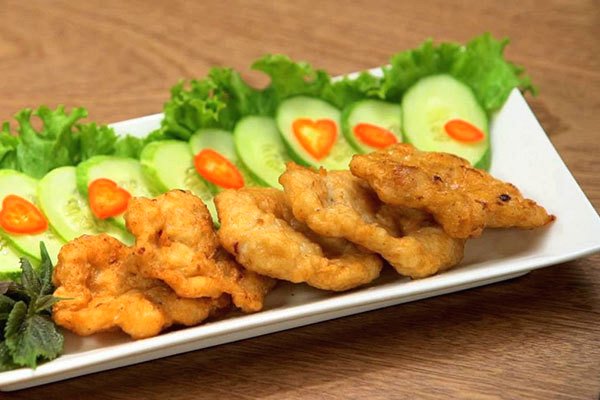
As you walk through the ground floor of Ha Long Market I (Chợ Hạ Long 1), follow your nose to the dedicated food section. You will see vendors frying the patties fresh on the spot.
Taste before you buy: Most vendors are happy to offer a small, hot sample.
Check the ingredients: Premium chả mực should contain 90-95% pure squid. If the price seems unusually cheap, it likely contains a high percentage of flour or pork fat.
Packaging: If you plan to travel, ask the vendor to vacuum-seal (hút chân không) the patties so they stay fresh during your journey.
For a souvenir that is easy to pack and boasts a long shelf life, the dried seafood section on the upper floors of the market is a treasure trove.
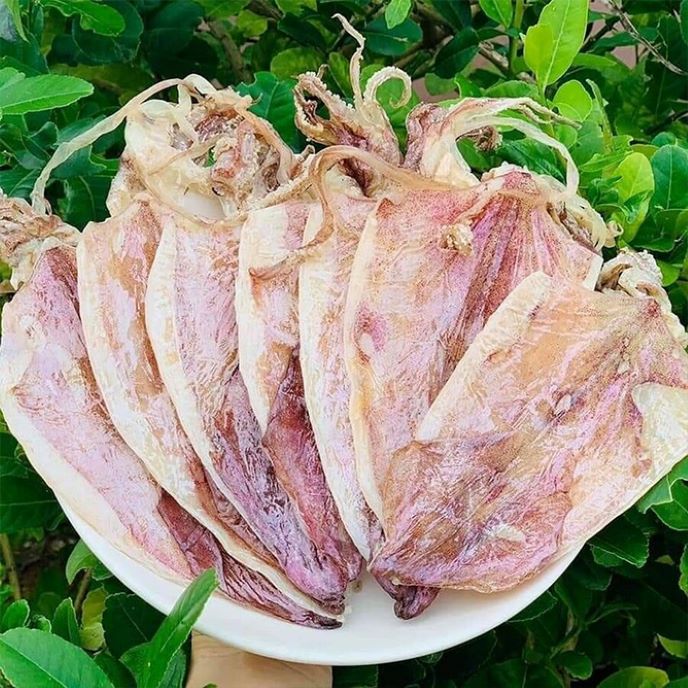
Dried Squid (Mực Khô): Look for pieces that have a light pinkish hue, a dusty white powder coating (a sign of proper sun-drying), and are dry to the touch. When grilled over charcoal, this squid becomes incredibly fragrant and tender, making it the perfect accompaniment to a cold local beer.
Sá Sùng (Peanut Worms): Do not let the name or appearance deter you. Sá sùng is one of the most expensive and highly prized culinary ingredients in Vietnam. Historically used as a natural alternative to MSG, just a few dried pieces of sá sùng added to a pot of pho broth will give it an unbelievably deep, sweet, and savory flavor. It is a luxurious gift for any home cook.
Dried Shrimp (Tôm Khô): Bright orange, sweet, and intensely flavorful, these are perfect for adding depth to soups, stir-fries, or traditional Vietnamese salads.
The calm, mineral-rich waters of Halong Bay are ideal for pearl farming, making local pearls one of the most elegant and luxurious keepsakes you can purchase.
At the market, you will find both freshwater and saltwater pearls made into necklaces, earrings, bracelets, and rings.
Saltwater Pearls (Akoya, South Sea, Tahitian): Grown in the open bay, these pearls are prized for their thick nacre, brilliant luster, and perfectly round shapes. They are more expensive but represent a true piece of Halong’s marine ecosystem.
Freshwater Pearls: More affordable and available in a wider variety of pastel colors and irregular, organic shapes (baroque pearls).
While there are jewelry stalls inside the main market building, buying high-value pearls requires caution. Genuine pearls feel slightly cool to the touch and have subtle natural imperfections. If a pearl is absolutely flawless and cheap, it is likely glass or plastic. For high-end, certified pearl jewelry, consider visiting the dedicated pearl farm showrooms on the bay, but for fun, casual accessories, the market stalls offer excellent bargaining opportunities.
>>> Explore More: https://emperorcruises.com/halong-international-cruise-port/
Quảng Ninh province is the coal capital of Vietnam, and local artisans have turned this rugged industrial resource into a unique, delicate art form.
Using high-quality anthracite coal, skilled carvers chisel, grind, and polish raw black rocks into smooth, shining sculptures. Common designs include miniature sailboats, water buffaloes, portraits of historical figures, and replicas of Halong’s iconic karsts, such as the Fighting Cocks Island.
A coal sculpture is a deeply regional souvenir that you will struggle to find anywhere else in Vietnam. The contrast between the deep, matte black of the raw coal and the glossy, polished details of the carving makes for a striking decorative piece on any desk or bookshelf. Just be sure to wrap it carefully in bubble wrap, as anthracite can be brittle.
To wash down the rich seafood of the region, the locals turn to traditional infused spirits. Two local drinks stand out at the market:
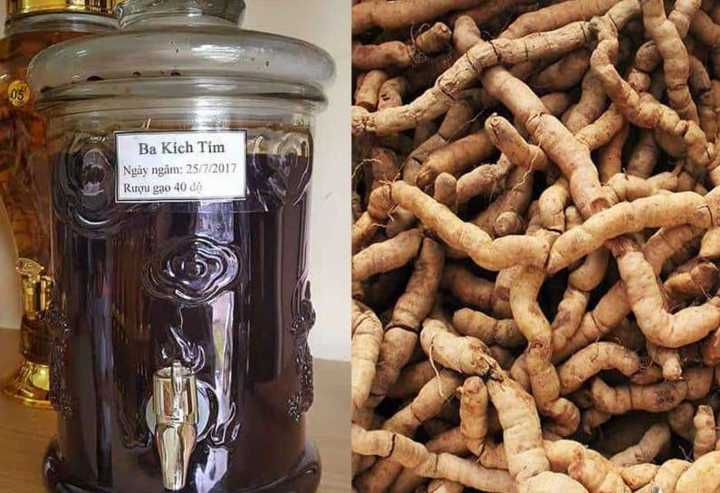
Rượu Ba Kích: This violet-hued rice wine is infused with the root of the Ba Kích plant (morinda officinalis), which grows wild in the mountainous districts of Quảng Ninh. It has an earthy, slightly sweet herbal flavor and is traditionally believed to boost energy and promote longevity.
Rượu Mơ Yên Tử (Yên Tử Apricot Wine): Sourced from the sacred slopes of Mount Yên Tử, this sweet, golden liqueur is made from slow-fermented forest apricots. It is smooth, tart, and highly refreshing, making it an excellent dessert wine to share with friends back home.
To make the most of your shopping experience at Ha Long Market, keep these practical tips in mind:
Go early: The best time to visit for food and fresh seafood is between 7:00 AM and 9:00 AM. This is when the market is at its most energetic, and you can witness the daily rhythm of local trade.
Bargain with a smile: While food prices are generally fixed, souvenirs, handicrafts, and dried goods are open to negotiation. Start by offering about 20-30% less than the initial quoted price, and always keep the interaction lighthearted and polite.
Watch your belongings: Like any bustling market worldwide, keep an eye on your personal belongings, especially in crowded, narrow aisles.
Ha Long Market is far more than a place to purchase goods; it is a living museum of local flavors, traditional crafts, and coastal warmth. Whether you walk away with a bag of vacuum-sealed, hand-pounded chả mực, a polished coal sailboat, or a delicate pearl pendant, you are taking home a tangible connection to the people who call this natural wonder home.
To complement your mainland market adventures with a serene and luxurious journey through the bay’s hidden lagoons and floating villages, explore the exquisite cruise itineraries available at
Halong Bay is globally celebrated for its towering limestone karsts rising from emerald waters. Yet, some of its greatest treasures lie hidden inside these stone giants. Among the dozens of caverns dotting the archipelago, Me Cung Cave (Maze Cave) and Sung Sot Cave (Surprise Cave) stand out as two of the most fascinating geological formations.
While both showcase the incredible power of millions of years of water erosion, they offer completely different travel experiences. One is a massive, theatrical masterpiece of light and stone, while the other is an intimate, mysterious labyrinth rich in prehistoric history.
Choosing between them - or understanding what makes each unique—will help you tailor your Halong Bay itinerary to your personal travel style.
Discovered by French explorers in 1901, who aptly named it "Grotte des Surprises" (Cave of Surprises), Sung Sot Cave is the largest, most famous, and most visited cavern in Halong Bay. Located on Bo Hon Island, it serves as the centerpiece for many classic bay cruises.
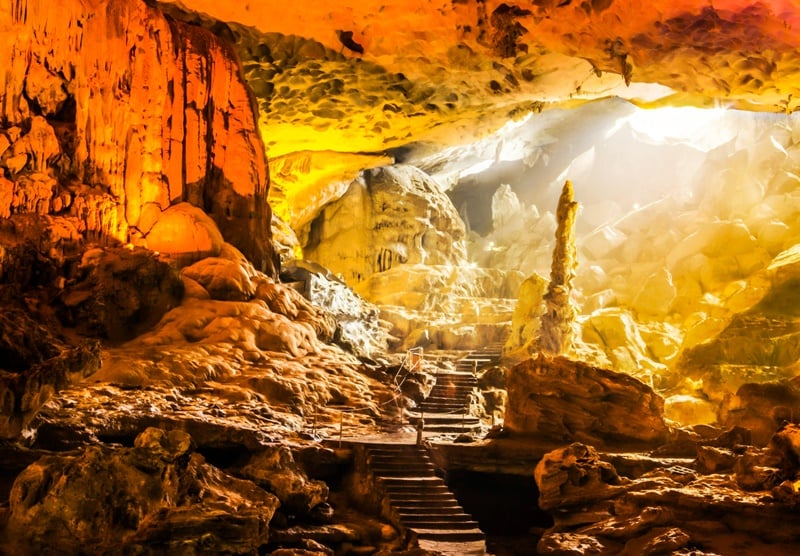
The defining characteristic of Sung Sot Cave is its sheer, jaw-dropping scale. The cave is divided into two massive chambers connected by a paved pathway:
The First Chamber: Often referred to as the "waiting room," this area is surprisingly spacious, featuring smooth limestone walls and a ceiling that resembles a grand dome.
The Second Chamber: As you walk through a narrow stone passage, the space suddenly expands into an immense theater that can accommodate thousands of people. The ceiling rises to over 30 meters, creating a powerful sense of awe.
The entire path inside Sung Sot is well-paved, flat, and lined with sturdy handrails. While there are about 50 steps to climb to reach the entrance, the walk inside is highly accessible, making it an excellent option for families, seniors, and casual walkers..jpg)
Because of its popularity, Sung Sot Cave is highly developed. A sophisticated, multi-colored LED lighting system illuminates the massive stalactites and stalagmites, highlighting formations that resemble historical figures, animals, and flowing drapery.
The most famous formation here is a giant, sword-shaped stalactite that local folklore connects to the legend of Saint Giong, a mythical Vietnamese hero who left his weapon behind to guard the bay after defeating foreign invaders.
>>> See More: https://emperorcruises.com/luon-cave-ha-long-bay/
Located on Lom Bo Island, about two kilometers southwest of Sung Sot, Me Cung Cave offers a stark contrast. True to its name, which translates to "Maze Cave," Me Cung is an intricate network of narrow, winding corridors, low ceilings, and multi-level chambers. It feels less like a tourist attraction and more like an active archaeological expedition.
What sets Me Cung Cave apart from almost every other cave in Halong Bay is its deep historical significance. It is recognized as an invaluable archaeological site belonging to the Soi Nhu culture, which thrived between 7,000 and 10,000 years ago.
As you approach the entrance, you can see thick layers of fossilized freshwater Melania snail shells embedded in the stone walls. These shells are the remnants of ancient meals eaten by prehistoric humans who used the cave as a shelter long before the valley was flooded by the rising sea. The air inside is cool, damp, and carries a distinct, earthy smell of ancient stone and undisturbed nature.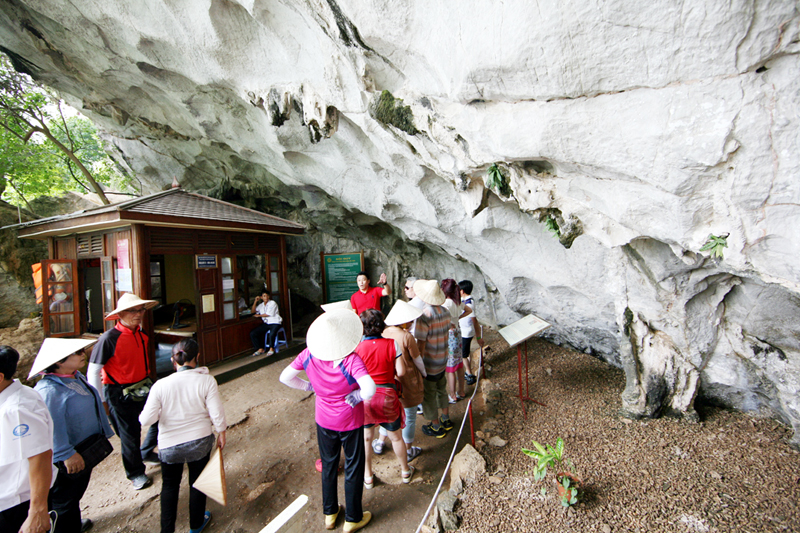
While Sung Sot Cave ends inside the mountain, the journey through Me Cung Cave leads you upward and outward. After navigating the narrow stone tunnels, you emerge onto a high viewing platform on the side of the karst.
From here, a stone staircase leads down to Me Cung Lake, a completely enclosed saltwater lake surrounded by sheer limestone cliffs. Because the lake is isolated from the open sea, it has developed its own micro-ecosystem, home to rare species of plants, corals, and marine life. The view of this quiet, hidden lake from above is one of the most serene sights in the entire bay.
To help you quickly evaluate which cave fits your preferences, here is a breakdown of their key differences:
| Feature | Sung Sot Cave (Surprise Cave) | Me Cung Cave (Maze Cave) |
| Primary Appeal | Massive scale, grand chambers, dramatic lighting | Historical relics, maze-like paths, hidden lake |
| Physical Effort | Moderate (steps to entrance, flat inside) | Higher (narrow paths, steeper climbs, uneven terrain) |
| Crowd Levels | High (the most popular cave in the bay) | Low to moderate (quiet and intimate) |
| Key Highlight | The "Sword of Saint Giong" & giant dome | Fossilized shell layers & the secluded Me Cung Lake |
| Vibe | Majestic, theatrical, commercial | Adventurous, historical, serene |
The decision between Me Cung and Sung Sot ultimately depends on what you want to get out of your Halong Bay experience.
You want to see the classic, grand scale of Halong: If this is your first time in the region and you want to experience the sheer physical grandeur that made the bay famous, Sung Sot is a must-see.
You are traveling with family: The paved paths and gentle gradients inside the cave make it easy to navigate for travelers of all ages.
You enjoy dramatic visual displays: The colorful lighting highlights the geological structures in a way that feels cinematic.
You prefer to avoid the crowds: If you want to experience the quiet majesty of the bay without sharing the path with hundreds of other tourists, Me Cung offers a peaceful alternative.
You love history and archaeology: Standing inches away from fossilized shells discarded by humans thousands of years ago is a humbling experience that connects you deeply to the region’s past.
You enjoy a physical challenge and diverse scenery: The climb through the narrow passages and the rewarding view of the enclosed Me Cung Lake offer a richer, more active outdoor adventure.
Regardless of which cave you decide to explore, keeping a few practical tips in mind will ensure a comfortable and safe trip:
Footwear is key: The interior of these caves can be humid and damp. Wet limestone can be slippery, so skip the sandals and opt for sturdy walking shoes or sneakers with good grip.
Respect the formations: Stalactites and stalagmites take thousands of years to grow just a few centimeters. Avoid touching the rock formations, as the natural oils from your hands can stunt their growth and discolor the stone.
Pack light: Since both caves require climbing stairs to enter, leave large bags or heavy backpacks on your cruise ship. A small camera, a bottle of water, and a light jacket (as the interiors can sometimes be cool) are all you need.
Sung Sot Cave and Me Cung Cave represent two different sides of Halong Bay’s natural heritage. Sung Sot is a celebration of scale and natural architecture, offering a grand, unforgettable look at the bay’s geological wonders. Me Cung, on the other hand, is a quieter, more intellectual journey that rewards the curious traveler with prehistoric secrets and a stunning hidden lake. Both are masterpieces of time, water, and stone.
To experience these magnificent caverns on a journey that combines deep cultural storytelling with absolute luxury on the water, explore the curated itineraries available at
Trong số hàng ngàn đảo đá lớn nhỏ làm nên danh tiếng của di sản thiên nhiên thế giới Vịnh Hạ Long, Hòn Gà Chọi nổi lên như một biểu tượng mang tính nhận diện cao nhất. Không chỉ là một tuyệt tác được nhào nặn bởi bàn tay của tạo hóa qua hàng triệu năm, hòn đảo này còn lưu giữ những nét đẹp văn hóa và nghệ thuật độc đáo, khơi gợi niềm cảm hứng bất tận cho lữ khách bốn phương.
Hòn Gà Chọi (còn có tên gọi phổ biến khác là Hòn Trống Mái) tọa lạc ở phía tây nam của Vịnh Hạ Long. Khối đá này nằm cách cảng tàu du lịch quốc tế Tuần Châu khoảng 5 km, thuộc khu vực biển kín gió và phẳng lặng. Đây thường là điểm dừng chân đầu tiên hoặc nằm ngay trên hải trình di chuyển của hầu hết các tuyến tàu tham quan vịnh ban ngày.
Tên gọi "Gà Chọi" xuất phát từ chính hình dáng đặc trưng của hai khối đá vôi lớn đứng sừng sững đối diện nhau giữa sóng nước. Từ xa nhìn lại, hai đảo đá này trông giống hệt như hai chú gà khổng lồ đang giương cánh, rướn cổ chuẩn bị bước vào một trận đấu kịch tính. Sự chân thực và sinh động trong hình dáng đã khiến người dân chài lưới thuở xưa đặt cho nơi đây một cái tên vô cùng mộc mạc, gần gũi với đời sống lao động thường nhật.
Nhìn từ góc độ khoa học, Hòn Gà Chọi là một trong những khối đá vôi tiêu biểu cho quá trình phong hóa địa chất karst diễn ra suốt hàng triệu năm tại Vịnh Hạ Long. Sự mài mòn liên tục của sóng biển, gió và sự thay đổi của mực nước đã gọt giũa nên một cấu trúc vô cùng kỳ lạ.
| Tiêu chí | Thông số chi tiết |
| Chiều cao | Khoảng 10 – 12 mét |
| Cấu trúc chân đế | Nhỏ hẹp, bị xâm thực mạnh bởi nước biển |
| Cấu trúc phần đỉnh | Phình to, tạo dáng hình cánh và đầu gà |
| Tuổi thọ địa chất | Hàng triệu năm tuổi |
Điểm khiến bất kỳ ai chiêm ngưỡng Hòn Gà Chọi cũng phải ngỡ ngàng chính là sự mất cân đối đầy nghệ thuật. Toàn bộ khối đá khổng lồ nặng hàng chục tấn phía trên lại được nâng đỡ bởi những chiếc "chân" rất mảnh mai nằm sát mặt nước.
Nhìn tư thế đứng chênh vênh ấy, người ta có cảm giác như hai đảo đá có thể đổ sập xuống lòng biển bất cứ lúc nào trước những cơn sóng dữ. Tuy nhiên, sự kết hợp tài tình của cấu trúc đá vôi vững chắc và dòng chảy tự nhiên đã giúp Hòn Gà Chọi đứng vững qua hàng ngàn năm phong ba bão táp, tạo nên một biểu tượng thách thức thời gian.
Sức hút của Hòn Gà Chọi không chỉ dừng lại ở sự tò mò về cấu trúc địa chất, mà còn nằm ở sự biến ảo hình ảnh theo từng góc độ tiếp cận của con thuyền.
Khi con thuyền du lịch tiến lại gần từ phía xa, hai khối đá hiện lên sừng sững, sắc nét trên nền trời xanh. Lúc này, thế đá trông vô cùng dũng mãnh và tràn đầy năng lượng. Hai chú gà như đang gồng mình, xù lông chuẩn bị lao vào nhau trong một trận chiến bảo vệ lãnh thổ. Ánh sáng mặt trời chiếu nghiêng vào các vách đá xám rêu phong làm nổi bật lên những đường gân góc cạnh, mạnh mẽ.
Khi con thuyền lướt qua bên cạnh và thay đổi góc quan sát, khoảng trống giữa hai khối đá dần hẹp lại. Từ tư thế đối đầu, hai khối đá dường như xích lại gần nhau hơn, tựa đầu vào nhau đầy tình cảm. Lúc này, hình ảnh hai chú gà chọi bỗng chốc hóa thành đôi chim uyên ương đang e ấp trao nhau cử chỉ ngọt ngào giữa biển khơi. Sự chuyển biến mềm mại này mang lại một cảm xúc hoàn toàn khác biệt, nhẹ nhàng và giàu chất thơ.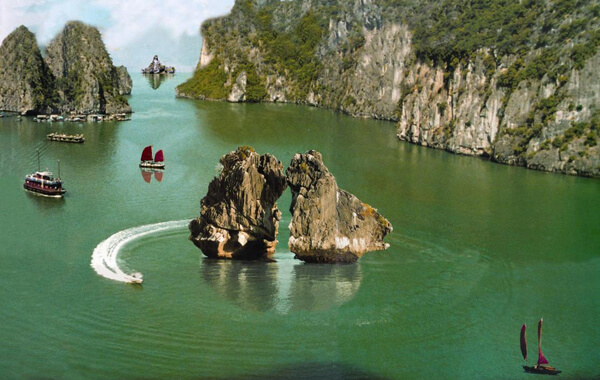
Trong tâm thức của người Việt, Hòn Gà Chọi không đơn thuần là một thắng cảnh du lịch. Nơi đây đã trở thành biểu tượng cho sự gắn kết bền chặt, sự thủy chung và tình yêu đôi lứa. Hình ảnh Hòn Gà Chọi xuất hiện rộng rãi trên các ấn phẩm truyền thông, bưu ảnh, logo nhận diện thương hiệu và thậm chí là các tác phẩm hội họa, thủ công mỹ nghệ xuất khẩu ra thế giới.
Tuy nhiên, do nằm giữa biển khơi chịu tác động trực tiếp của tự nhiên, Hòn Gà Chọi đang phải đối mặt với nguy cơ bị sạt lở và bào mòn phần chân đế theo thời gian. Hiện nay, các cơ quan quản lý vịnh cùng các nhà khoa học hàng đầu đang triển khai nhiều nghiên cứu kỹ thuật để tìm phương án gia cố chân đá một cách tự nhiên nhất. Những nỗ lực này nhằm giữ gìn nguyên vẹn vẻ đẹp độc bản của Hòn Gà Chọi cho các thế hệ tương lai, khẳng định giá trị bền vững của vùng di sản thế giới.
>>> Chiêm ngưỡng hòn Chó Đá Hạ Long để khám phá vẻ đẹp độc đáo của biểu tượng canh giữ giữa vùng biển kỳ vĩ.
Để chuyến tham quan và chụp hình lưu niệm tại Hòn Gà Chọi được trọn vẹn nhất, bạn nên lưu ý một số kinh nghiệm thực tế sau:
Thời điểm ngắm cảnh đẹp nhất: Hãy ưu tiên ngắm Hòn Gà Chọi vào lúc bình minh hoặc hoàng hôn. Ánh sáng dịu nhẹ của hai thời điểm này không chỉ làm nổi bật màu rêu phong cổ kính của đá vôi mà còn tạo nên những mảng sáng tối vô cùng nghệ thuật trên mặt nước.
Vị trí chụp ảnh lý tưởng: Bạn nên đứng ở khu vực boong mở (sundeck) phía trên của tàu để có tầm nhìn bao quát, không bị che khuất bởi mạn tàu. Hãy lắng nghe sự hướng dẫn của thuyền trưởng để bắt đúng khoảnh khắc hai khối đá "chạm đầu" vào nhau.
Trang phục phù hợp: Nên chọn những trang phục có màu sắc tươi sáng như trắng, vàng hoặc đỏ để nổi bật trên nền xanh của biển trời Hạ Long khi lên hình.
Hòn Gà Chọi là một kiệt tác thiên tạo tuyệt vời, một biểu tượng chứa đựng cả giá trị địa chất phi thường lẫn chiều sâu văn hóa truyền thống của người Việt. Chuyến hành trình khám phá Vịnh Hạ Long của bạn sẽ không thể coi là trọn vẹn nếu chưa một lần được tận mắt chiêm ngưỡng dáng đứng kiêu hãnh của đôi gà đá giữa sóng nước trùng khơi.
Để bắt đầu một hải trình thong dong, len lỏi qua các hòn đảo huyền thoại và tận hưởng dịch vụ nghỉ dưỡng hoàng gia đẳng cấp nhất trên vịnh di sản, bạn có thể tham khảo thêm thông tin chi tiết tại